Robert Arthur has developed effective partnerships and networks, and secured resources to implement multi-disciplinary projects.

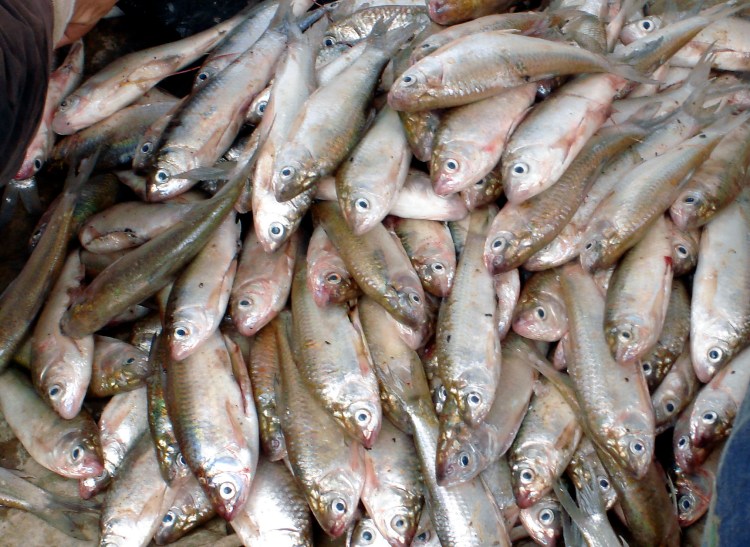

A characteristic of inland fisheries is that they must frequently be considered in the context of water and land use requiring integrated approaches. Robert has led projects to develop and implement such approaches, e.g. the Elephant Marsh adaptive management plan and flexible waterbody management strategies in India, Bangladesh and Southeast Asia.
Robert has also gained experience in developing human and institutional capacity, related to ecosystem approaches to fisheries management, e.g. through co-management and, more specifically, in Malawi using the FAO EAFm IF materials. Robert also leads two large-scale EU projects mapping the use of ecosystem approaches across the Atlantic, Mediterranean, Black Sea and Outermost Regions.
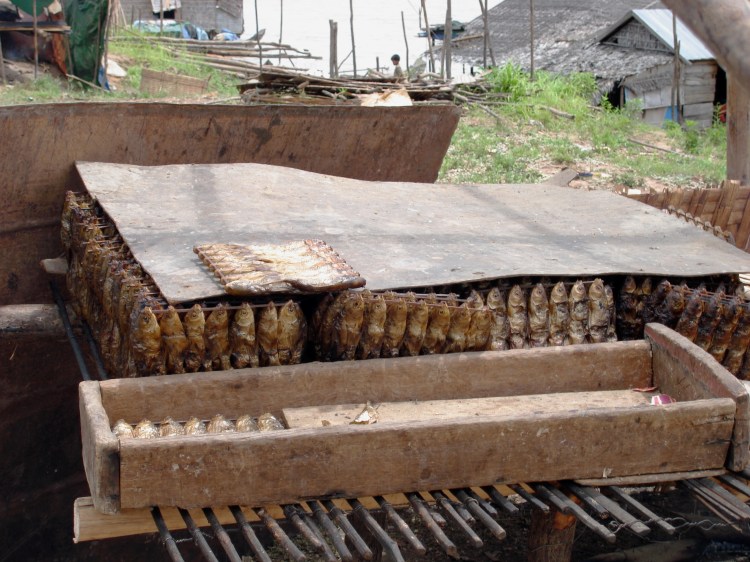

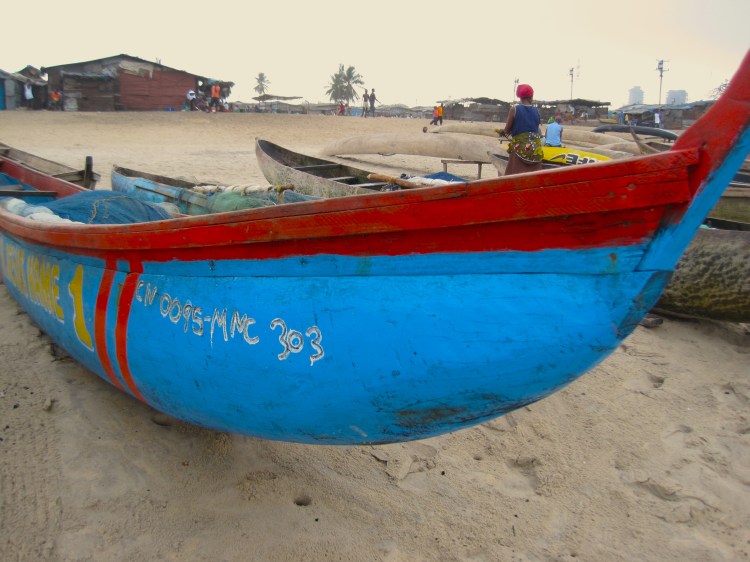
Inland fisheries are dynamic: this creates uncertainties and challenges for management. A particular interest and focus of Robert’s is inland fisheries management and governance in the context of change. This includes understanding how environmental and socio-economic change affect fisheries and those dependent upon them. Robert also considers how, in turn, fishers respond and adapt to change and the governance processes that enable and constrain their choices. This underpins his work on developing and enhancing adaptive capacity, addressing human rights issues and identifying locally appropriate (including nature-based) management interventions. There is also a methodological dimension: Robert has developed data collection methods, integrating different knowledge types for data-poor fisheries and formulating inclusive governance and management approaches. This has contributed new knowledge shared through Robert’s publications, conferences and teaching at Imperial College.
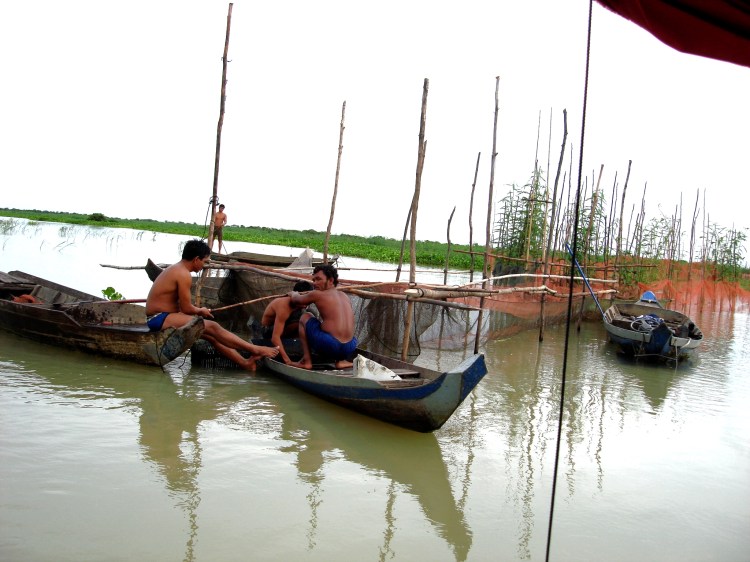

An important feature of Robert’s work is not just what he does, but the way that he does it. Collaboration, co-design and capacity-building are central to his approach. Robert frequently supports national and local partners to develop their own capacity to better assess and manage natural resources. In Cambodia, Robert worked closely with the Fisheries Administration in their development and implementation of work plans, sitting on the Technical Working Group. He also assisted fisher communities in northern Cambodia to document their fisheries and develop management plans. Collaboration is also important in teamwork and Robert has developed extensive experience leading, coordinating and supporting teams of staff at various stages in their careers.


In the designing and managing of projects Robert emphasises results and impact, consistently including evaluation to ensure constant development. This extends from participant evaluations of workshops through to programme level assessments. This emphasis on results means that Robert’s project leadership has repeatedly delivered tangible outcomes and developmental impact. He regularly provides analysis and research to inform policy and practice, frequently drafting technical reports and peer-reviewed publications, listed below.
Publications
Arthur, R.I. et al. Small-scale fisheries and local food systems: transformations, threats and opportunities. Fish and Fisheries. https://doi.org/10.1111/faf.12602. (2021)
Arthur, R.I., et al. Societal values of inland fisheries. In: K. Tockner and T. Mehner (eds) Encyclopedia of Inland Waters. Elsevier. https://doi.org/10.1016/B978-0-12-819166-8.00030-X. (2021)
Arthur, R.I. et al. A review characterizing 25 ecosystem challenges to be addressed by an Ecosystem Approach to Fisheries Management in Europe. Frontiers in Marine Science. https://doi.org/10.3389/fmars.2020.629186. (2021).
Arthur, R.I. et al. A 20-year retrospective on the provision of fisheries subsidies in the European Union. ICES Journal of Marine Science https://doi.org/10.1093/icesjms/fsaa142. (2020)
Arthur, R.I. and Daniels, R. Change in fisheries access arrangements as a result of hydropower development: the case of reservoir fisheries at the Mount Coffee hydropower scheme in Liberia. Fisheries Management and Ecology 28(3). https://doi.org/10.1111/fme.12459. (2020)
Arthur, R.I. Small-scale fisheries management and the problem of open access. Marine Policy 115: 103867. https://doi.org/10.1016/j.marpol.2020.103867. (2020)
Arthur, R.I. and Garaway, C.J. Measuring fish catch and consumption: practical methods for small-scale fisheries based on length as an alternative to weight-based approaches. Fisheries Management and Ecology. 27(3): 270-278. https://doi.org/10.1111/fme.12409. (2019)
Arthur, R.I. et al. Achieving Net Benefits: A road-map for cross-sectoral policy development in response to the unintended use of mosquito nets as fishing gear. (2019)
Arthur, R.I. et al. Fisheries and aquaculture; their contribution to economic growth, food security and nutrition: an assessment of the published evidence. World Development 79: 177–196: https://doi.org/10.1016/j.worlddev.2015.11.007. (2016)
Arthur, R.I., Friend, R.M. and Béné, C. Social benefits from inland fisheries: implications for a people-centred response to management and governance challenges. In: J.F. Craig (ed.). Inland Fisheries Wiley, Oxford. (2016)
Arthur, R.I. et al. The Fishery Performance Indicators: A Management Tool for Triple Bottom Line Outcomes. PLOS One (http://journals.plos.org/plosone/article?id=10.1371/journal.pone.0122809). (2015).
Arthur, R.I. and Friend, R.M. (2011) Inland capture fisheries in the Mekong and their place and potential within food-led regional development. Global Environmental Change 21: 219-226. https://doi.org/10.1016/j.gloenvcha.2010.07.014
Arthur, R.I., Friend, R.M. and Marshke, M. Fostering collaborative resilience through adaptive co-management: Reconciling Theory and Practice in the Management of Fisheries in the Mekong Region. In: B. Goldstein (Ed). Collaborative resilience: moving through crisis to opportunity. MIT Press, 30 pages. (2011)
Arthur, R.I. and Friend, R.M. Over playing over-fishing: a cautionary tale from the Mekong. Society and Natural Resources 25: 3(1) 285-301. https://doi.org/10.1080/08941920.2011.583977. (2011)
Arthur, R.I., Friend, R.M. and Dubois, M. Fisheries, nutrition and regional development pathways: the potential for food-led regional development in: K. Lazarus, B. Resurreccion and N. Badenoch (eds.) Rites of access: seeking justice in managing Mekong region waters. Earthscan, London. (2011)
Arthur, R.I. et al. Impacts of fishing by dewatering on fish assemblages of tropical floodplain wetlands: a matter of frequency and context. Biological Conservation 144: 633-640. https://doi.org/10.1016/j.biocon.2010.11.005. (2010).
Arthur, R.I., Thompson, P. and Sultana, P. Integrating biological conservation into management: Community adaptive learning in the wetlands of Bangladesh. Biodiversity 11(1&2): 31-39. https://doi.org/10.1080/14888386.2010.9712644. (2010)
Arthur, R.I., Mees, C.C. and Halls, A.S. Assessing the impacts of fisheries management science: a review of DFID’s fisheries management science programme. Journal of Development Effectiveness 2(1): 158-172. https://doi.org/10.1080/19439340903469899. (2010)
Arthur, R.I. et al. Impacts of introduced aquaculture species on native fish communities: Nile tilapia and major carps in SE Asian freshwaters. Aquaculture 299: 81-88. https://doi.org/10.1016/j.aquaculture.2009.11.022. (2010)
Arthur, R.I., Friend, R. and Keskinen, M. Songs of the Doomed: The continuing neglect of capture fisheries in hydropower development in the Mekong. In: Molle, F.; Foran, T. and Käkönen, M. (eds), Contested Waterscapes in the Mekong Region: Hydropower, Livelihoods and Governance. London: Earthscan. (2009)
Arthur, R.I. and Sheriff, N. Fish and the poor.p15-39 In: R.M. Briones and A.G. Garcia (eds.) Poverty Reduction through Sustainable Fisheries: Emerging Policy and Governance Issues in Southeast Asia. Institute of Southeast Asian Studies, Singapore. (2008)
Arthur, R.I. et al. Adaptive co-management for social-ecological complexity. Frontiers in Ecology 7: 95-102. https://doi.org/10.1890/070089. (2008)
Arthur, R.I. et al. A social science perspective on enhancement outcomes: lessons learned from inland fisheries in southern Lao PDR. Fisheries Research 80: 37-45. https://doi.org/10.1016/j.fishres.2006.03.012. (2006)
Arthur, R.I. et al. Relationship between aggregated yield and fishing effort in multi-species fisheries. Canadian Journal of Fisheries and Aquatic Science 63 (6): 1334-1343. https://doi.org/10.1139/f06-038. (2006)
Arthur, R.I. and Garaway, C.J. Learning in action: a case from small waterbody fisheries in Lao PDR. In: J. Gonsalves, T. Becker, A. Braun, D. Campilan, H. de Chavez, E. Fajber, M. Kapiriri, J. Rivaca-Caminade, and R. Vernooy (eds.) Participatory Research and Development for sustainable agriculture and natural resource management: a sourcebook. CIP-UPWARD/IDRC. (2005)
Guidelines
Arthur, R.I. et al. Guidelines for Designing Data Collection Systems for Co-Managed Fisheries. FAO Fisheries Technical Paper. FAO, Rome. (2006)
Arthur, R.I. et al. Stock Assessment for Fishery Management – A Framework Guide to the use of the FMSP Fish Stock Assessment Tools. FAO Fisheries Technical Paper. Rome, FAO. (2006)
Arthur, R.I. Co-management: a synthesis of the lessons learned from the DFID Fisheries Management Science Programme. MRAG Ltd., London. (2005)
Arthur, R.I. and Garraway, C.J. Adaptive learning: a practical framework for the implementation of adaptive co-management— lessons from selected experiences in South and Southeast Asia. MRAG Ltd. London. (2004)
Arthur, R.I. and Garaway, C.J. Community Fisheries: lessons learned from Southern Lao PDR. MRAG Ltd. (2002)
Arthur, R.I. et al. Impacts of irrigation and aquaculture development on small-scale aquatic resources. Department for International Development Environmental Research Programme, UK. (2000)
 woodhillsolutions.co.uk